We are proud to work with companies that share our values, ethics, and meticulous approach to development and creativity.
about us

We live and breathe innovation and art, striving to create brand-new experiences that redefine what gaming can be. We are passionate, dedicated, and hard-working. We never back down from the boldest of ideas. We share unwavering courage and relentless pursuit of quality. We thrive on innovation, constantly pushing the boundaries of technology to surprise even the most seasoned gamers.
OUR STORY
In 2017, four people decided to create something extraordinary in the computer game industry. That's when Robert Bagratuni, Evgenia Sedova, Artem Galeev, and Oleg Gorodishenin got together and founded this company. The talented global team that leads Mundfish is focused on creating original, captivating, and unique gaming experiences, just like our globally renowned first title, Atomic Heart. Mundfish Studio came to life with the intention of inspiring gamers with awe and childlike joy for gaming.

With the release of our first game, our dynamic team of 30-somethings disrupted the industry with its creativity. We have built an incredible international community of 200 talents globally.
VALUES



Look at our inspirations
OUR PASSION
MUSIC
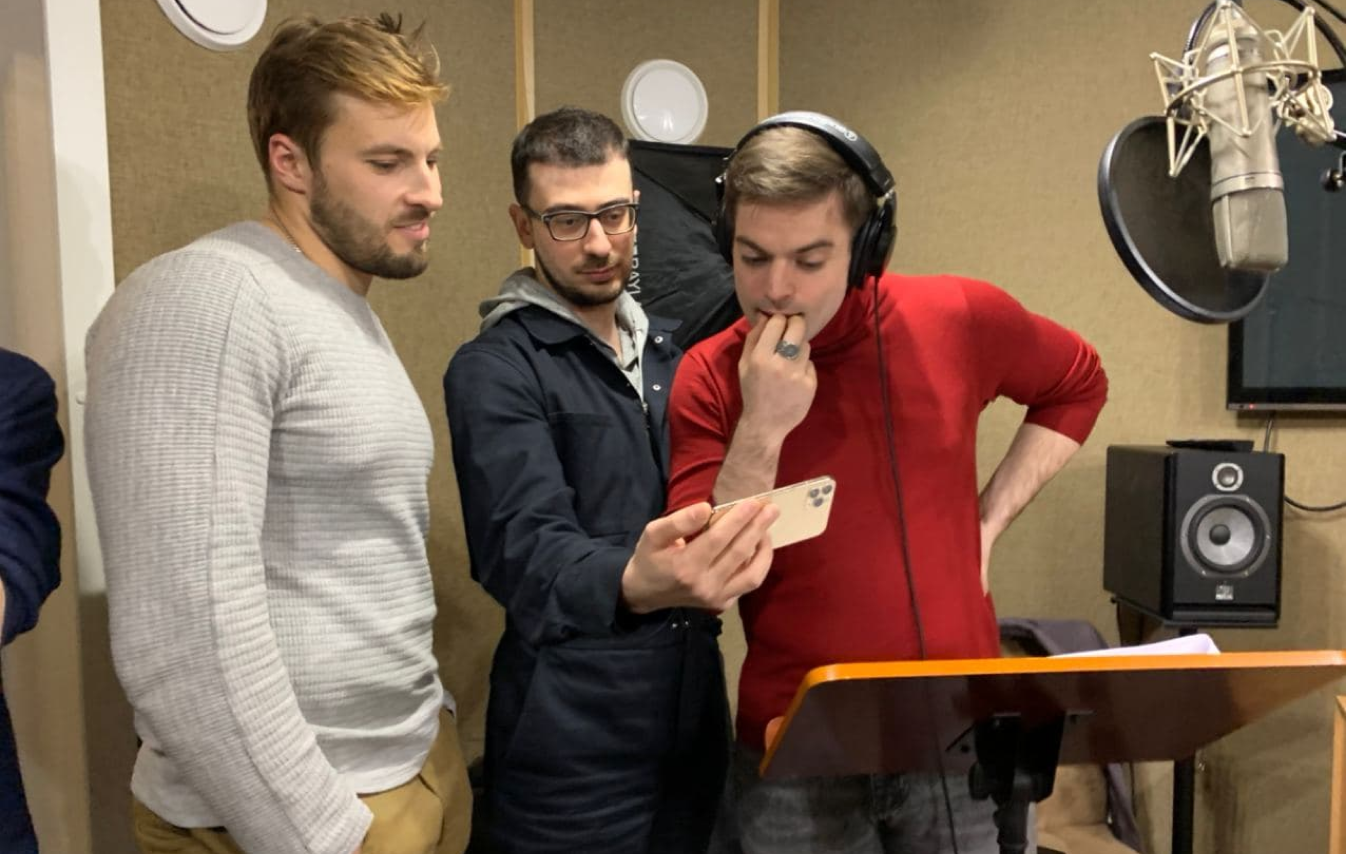
At Mundfish, we're very particular about sound. The music and sound in Atomic Heart are extremely important, not just because we consider ourselves serious audiophiles, but also because we're of the firm belief that sound and music account for half of the whole vibe of the game, half of the impact, and half of the emotions that players experience while playing the game. That's half the success of any creative idea.
In our projects, sound should perform not only an artistic function but also a technical one. In a sense, we want our players to experience a kind of synesthesia: sound should represent the structure, fabric, and origin of objects in the game's world, and their applied function should be to tell us which way we should go. This is how Andrey Bugrov, our sound director, outlines his approach and method of solving this creative yet technical problem.

Even at the very beginning of Aomic Heart, at the start of the testing and pre-production phases, we set ourselves a very high bar in terms of sound quality. To achieve the quality we wanted, we armed ourselves with a hammer and a sound recorder and started knocking on all the surfaces around us in a small office room. Since then, we've gradually accumulated our own sound library, which includes an unimaginable number of recordings of string vibrations and resonances of iron sheets, rods, barrels, chains, and car doors in various studios. We've smashed several dozen pounds of fruit and vegetables and torn apart an entire closet of clothes!

Together with Vlad Kreimer from Soma Laboratory and equipped with his Ether sound receivers, we went looking for the sounds of the Atomic Heart world, making field recordings of electromagnetic waves. Soma Lab's highly advanced sound devices are the basis of the technological sound design of our first game's world.
Many studio recordings were done using incredible Soyuz Microphones—precisely crafted, of the highest quality, and praised by the global professional music community. This allowed us to deliver the game's state-of-the-art sound quality, which was later recognized by Hollywood Music in Media Awards nomination in 2023.
Look at our inspirations
ART
Art and creativity are integral parts of the entertainment industry. In the gaming industry, technology is equally important. Thus, the art in computer games is a symbiosis of imagination and technology, which is a really difficult and ambitious task.
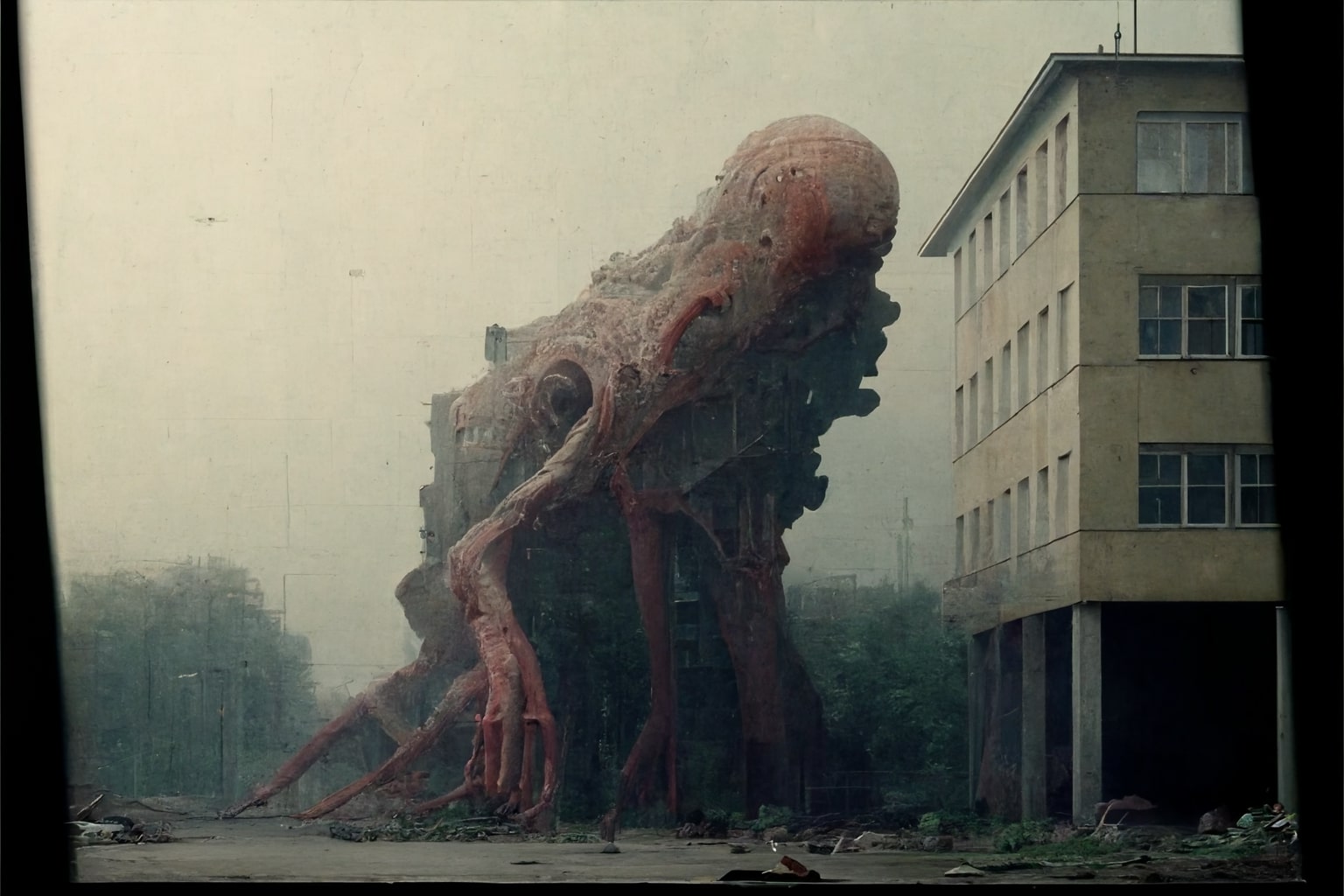
When working on Atomic Heart, Artem Galeev used the principles of modern eclecticism as the basis for the game design, combining imagery from the familiar past, embedded within each of our individual consciousness since childhood, with that of a new, previously unknown world of technology and a futuristic USSR.

In simpler terms, the above can be called "bionics"—a combination of biology and technology. Inanimate objects, based on the forms of real biological beings, become animated due to their emotional appearance, causing associations with real living beings. We see these images, observe them in motion, and feel strong contradictory emotions toward them—from fear and anxiety to joy and delight.
It is well known that the main achievements of Soviet designers of the 1950s–1970s were reached in the fields of space technology and in the production of military and heavy equipment, utilizing precision engineering. Many consumer goods were produced at military and heavy industry factories. This ensured their high quality and unique functionality. Soviet designers sought to create durable, high-quality things that were "timeless." The assortment policies of the state and the principles of modular design allowed for the creation of unified models that could be adapted to various social and cultural conditions. Such a reasonable, "eco-friendly" approach became the "calling card" of the Soviet system.

At Mundfish, our approach to constructing the world and designing objects has remained as scientific as it was in Soviet times. Every robot—whether anthropomorphic, flying, or whatever else—is creatively thought out, taking into account the smallest details, including those that set it in motion. Inside each robot, there are "guts" that make the mechanisms move and provide them with power.

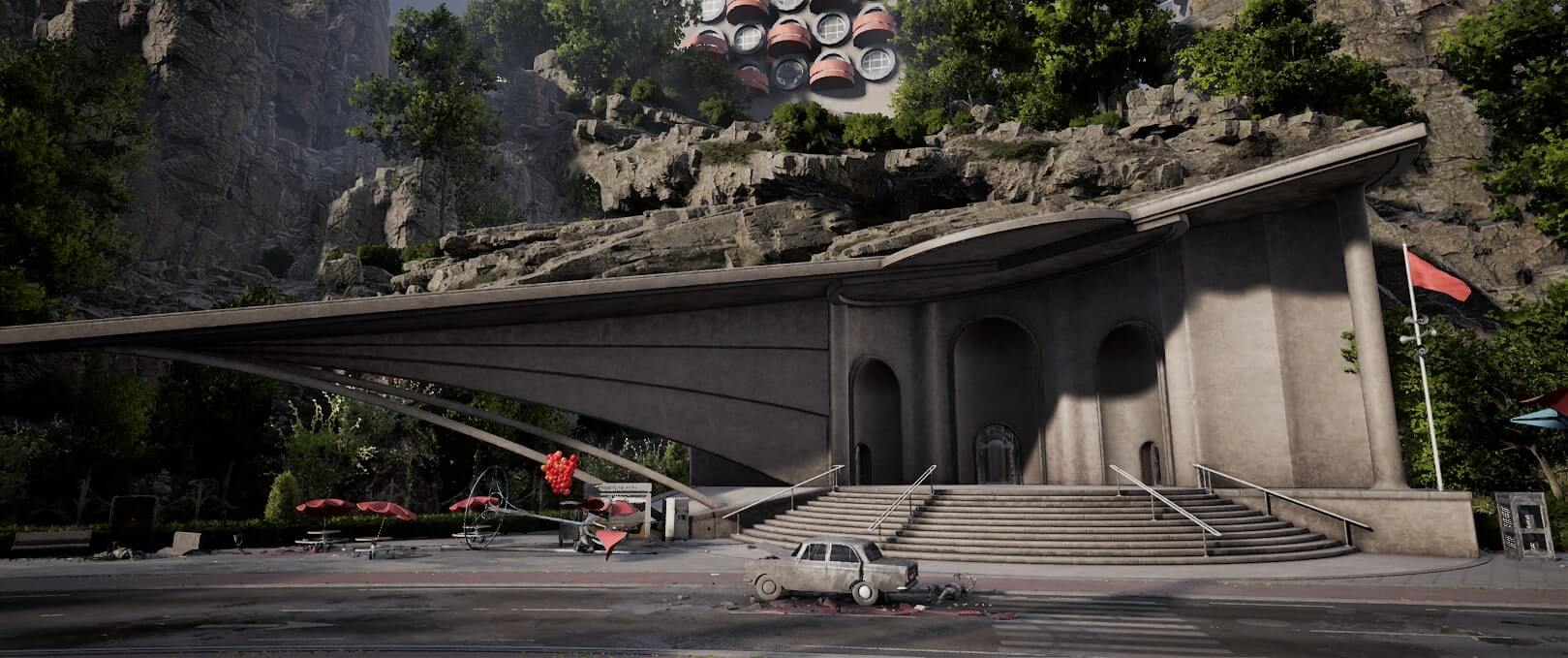
This approach affected the entire environment—all scientific laboratories, workshops, underground complexes, equipment, devices, and mechanisms are designed to reflect the research conducted there or their primary use. While traveling through magnetic laboratories, pesticide workshops, high-energy facilities, cold work labs, germination bunkers, and other research complexes, you will find yourself in a real "alternate future reality of the USSR." Every object that you see in the game has a logical connection to all the others.
Mundfish artists have created one of the most interesting and original projects of our time. Atomic Heart's setting is the world of scientific logic based on one simple dream—the conquest of space by man.
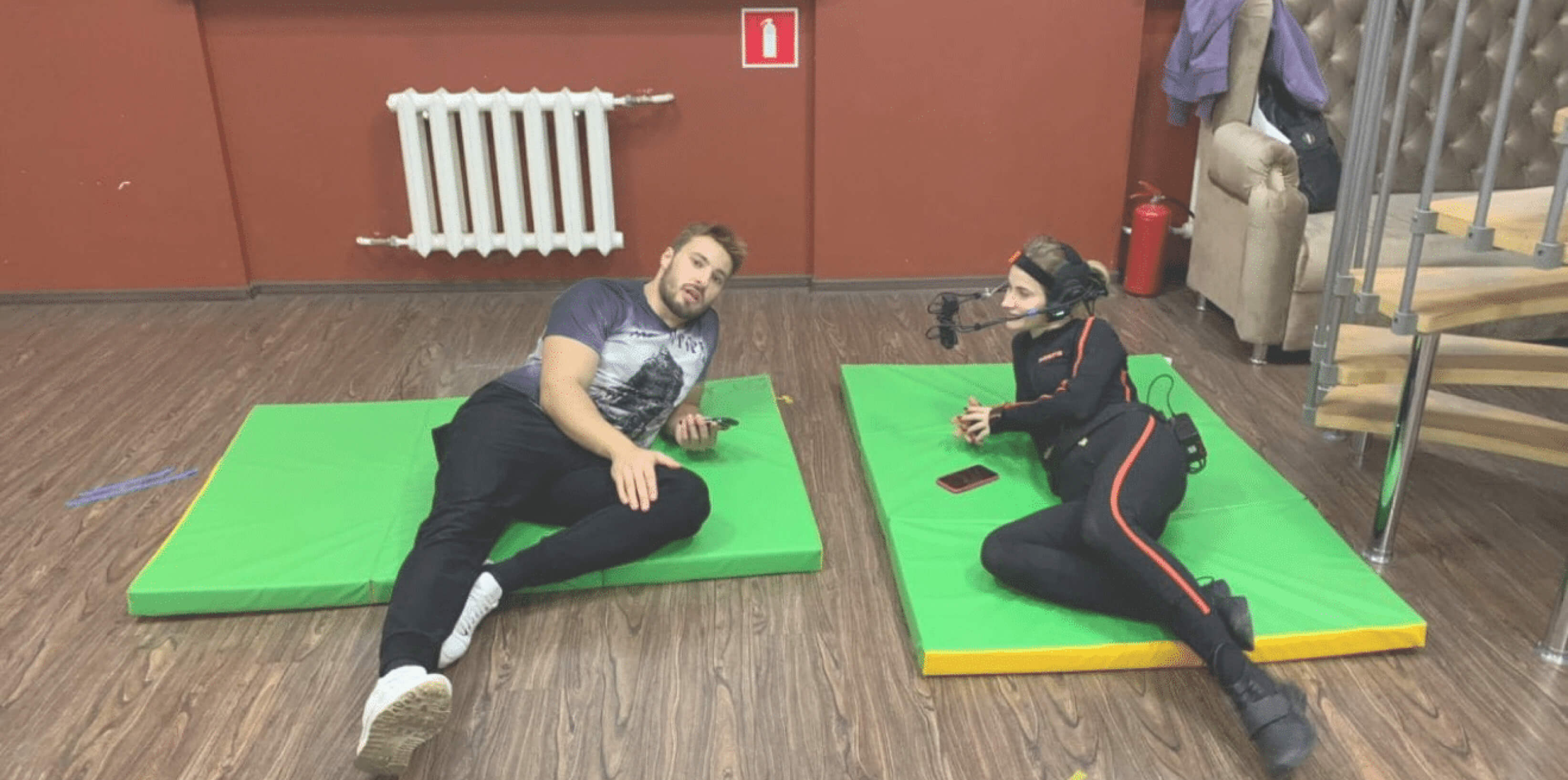

FILMING
Imagine: You're creating a computer game. In pre-production, lots of unknowns wait for you at every step, and every question—from which operating system to choose to which genre (shooter or RPG?)—haunts you. As a game developer, you choose the system and the mechanics for the game, work out the smallest details to do with the genre, and figure out the game's mechanical aspects, all while assembling your unique vision into a clear plan.
Then, all you have to do is figure out what to do with the plot and the script. There are just a few questions to tackle: "How long will it take to complete the story?"; "How many active heroes will there be?"; "Will your character talk or will they be silent?"; "If there are cutscenes, which ones will be in the first person and which will be in the third?"; "How many will there be?"; "Will it be all 'action and explosions' or will it be full of dialogue and Tarantinoesque gimmicks?"
Does that sound academic enough?
Naturally!

When we look at the work we did in retrospect, that's exactly what it seems like. The truth is, those were only a few of the issues that we had to work out, and it didn't happen like that. Of course, we had a plot, but we hadn't put it together into dialogue yet. We also knew that the main character wouldn't be silent, because he had too much to say (sometimes with a lot of obscenities).
And of course, we wanted to make sure that the player never—repeat that—never wanted to skip cutscenes. After all, ours is a story-driven game, which means that our efforts would've been worthless if the player skipped the cutscenes.
It was with these thoughts in mind that we came to an understanding of the production, its scale, and all the work that was ahead of us.

Now, we have our own production studio at Mundfish. We wrote an amazing story and brought in the best people for the job. Out of the 278 auditions we held during the pre-production of Atomic Heart, seven people were chosen.
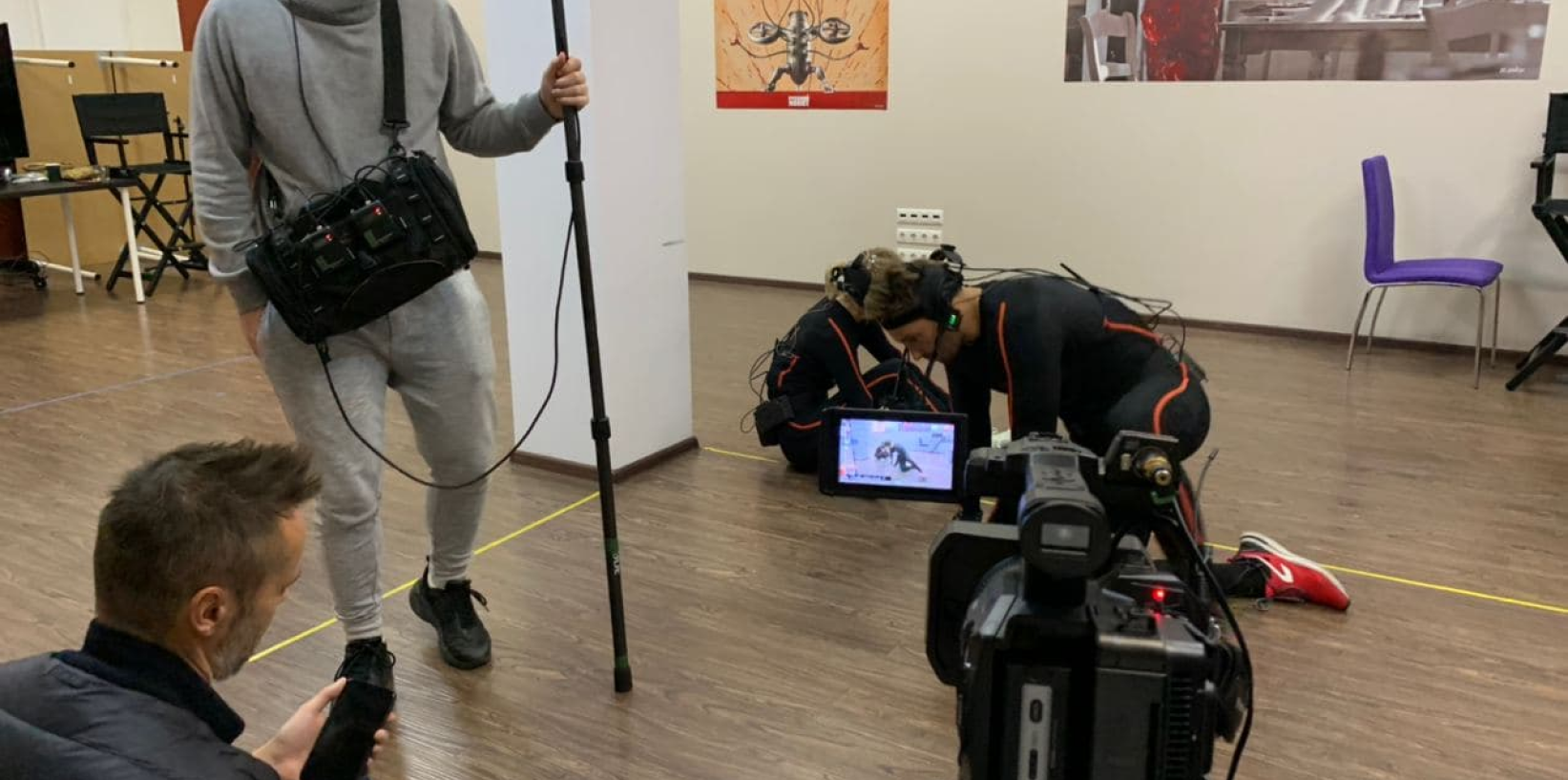
Then, we ordered Xsens suits and Dynamixyz helmets. We learned how to work with all this new tech, as well as how to record and interpret data from mocap and facial cameras. We created 3D scans of our characters with 56 emotions and ordered stunning, high-quality rigs from the best people in the world. We spent a year setting everything up and making sure it worked.

We didn't forget about virtual cameras either, so that our talented cameramen could shoot cutscenes just as they do in real life. And, of course, we mounted them just like they do for the best blockbusters.

We did all this so that you can enjoy a whole one and a half hours of amazing cutscenes in Atomic Heart. It has the plot of a powerful sci-fi thriller, made by people who don't just love their work but are absolutely crazy about it. You can be sure the same passion and commitment will be put into all our upcoming projects.
Как заполнять полотно
Our first project, Atomic Heart, doesn't just tell a captivating story and provide a vivid experience. The game's world is imbued with science—the achievements of Soviet scientists, their inventions, and their ambitious projects are an integral part of the universe. However, in the game's world, science isn't just a tool of the screenwriters. It's also a genuine educational tool. From the very start of development, we strove for Atomic Heart to do more than just entertain players and cause a rush of emotions. We wanted it to impart new knowledge as well. So, science became a central aspect of the game and a true passion for our team.

Our first project, Atomic Heart, doesn't just tell a captivating story and provide a vivid experience. The game's world is imbued with science—the achievements of Soviet scientists, their inventions, and their ambitious projects are an integral part of the universe. However, in the game's world, science isn't just a tool of the screenwriters. It's also a genuine educational tool. From the very start of development, we strove for Atomic Heart to do more than just entertain players and cause a rush of emotions. We wanted it to impart new knowledge as well. So, science became a central aspect of the game and a true passion for our team.
Our first project, Atomic Heart, doesn't just tell a captivating story and provide a vivid experience. The game's world is imbued with science—the achievements of Soviet scientists, their inventions, and their ambitious projects are an integral part of the universe. However, in the game's world, science isn't just a tool of the screenwriters. It's also a genuine educational tool. From the very start of development, we strove for Atomic Heart to do more than just entertain players and cause a rush of emotions. We wanted it to impart new knowledge as well. So, science became a central aspect of the game and a true passion for our team.
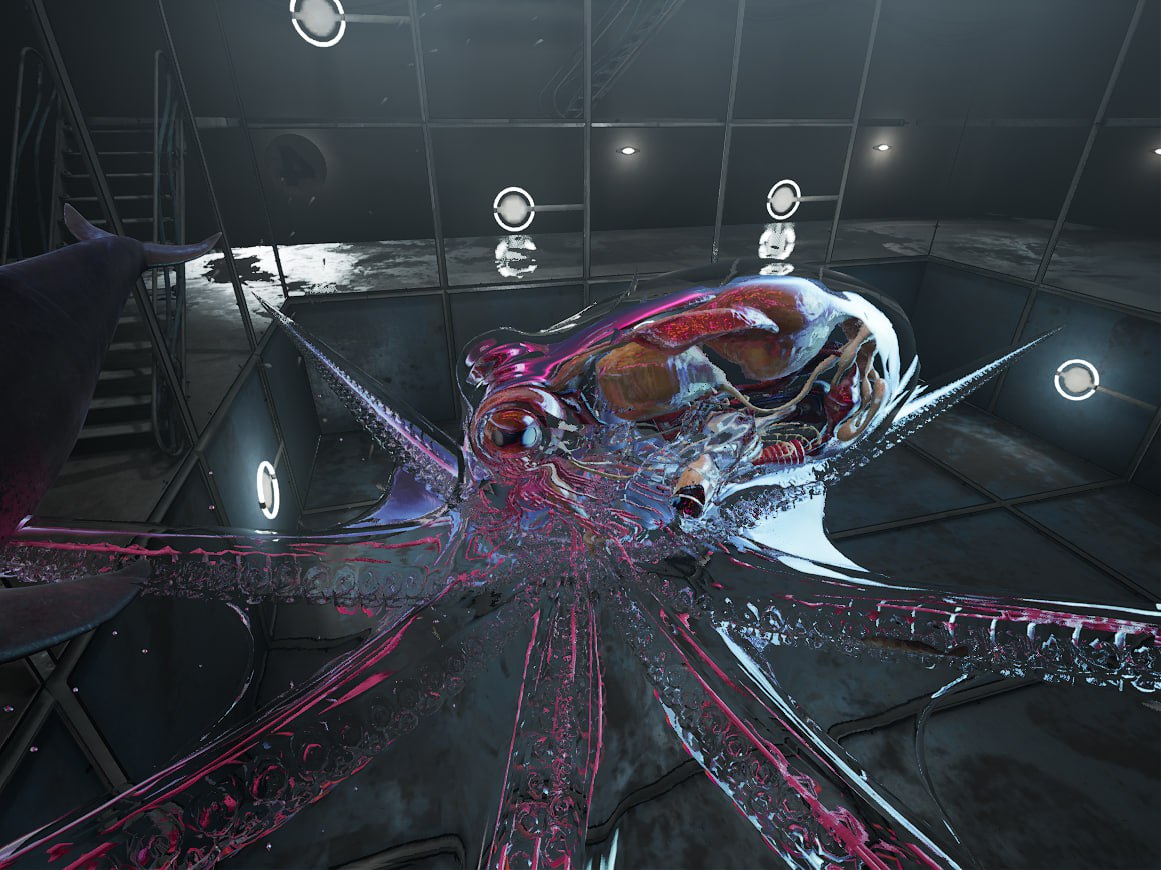
Science
Our first project, Atomic Heart, doesn't just tell a captivating story and provide a vivid experience. The game's world is imbued with science—the achievements of Soviet scientists, their inventions, and their ambitious projects are an integral part of the universe. However, in the game's world, science isn't just a tool of the screenwriters. It's also a genuine educational tool. From the very start of development, we strove for Atomic Heart to do more than just entertain players and cause a rush of emotions. We wanted it to impart new knowledge as well. So, science became a central aspect of the game and a true passion for our team.
Of course, some of the elements and discoveries in Atomic Heart greatly surpass the scientific achievements of the time. The theories we based them on, though, are far from made up. The notes, diaries, audio recordings and other materials players encounter in the game draw from real scientific laws and straddle the line between fantasy and reality. We strove to create a realistic, living world where each invention has its use, operating principle, and method of creation.
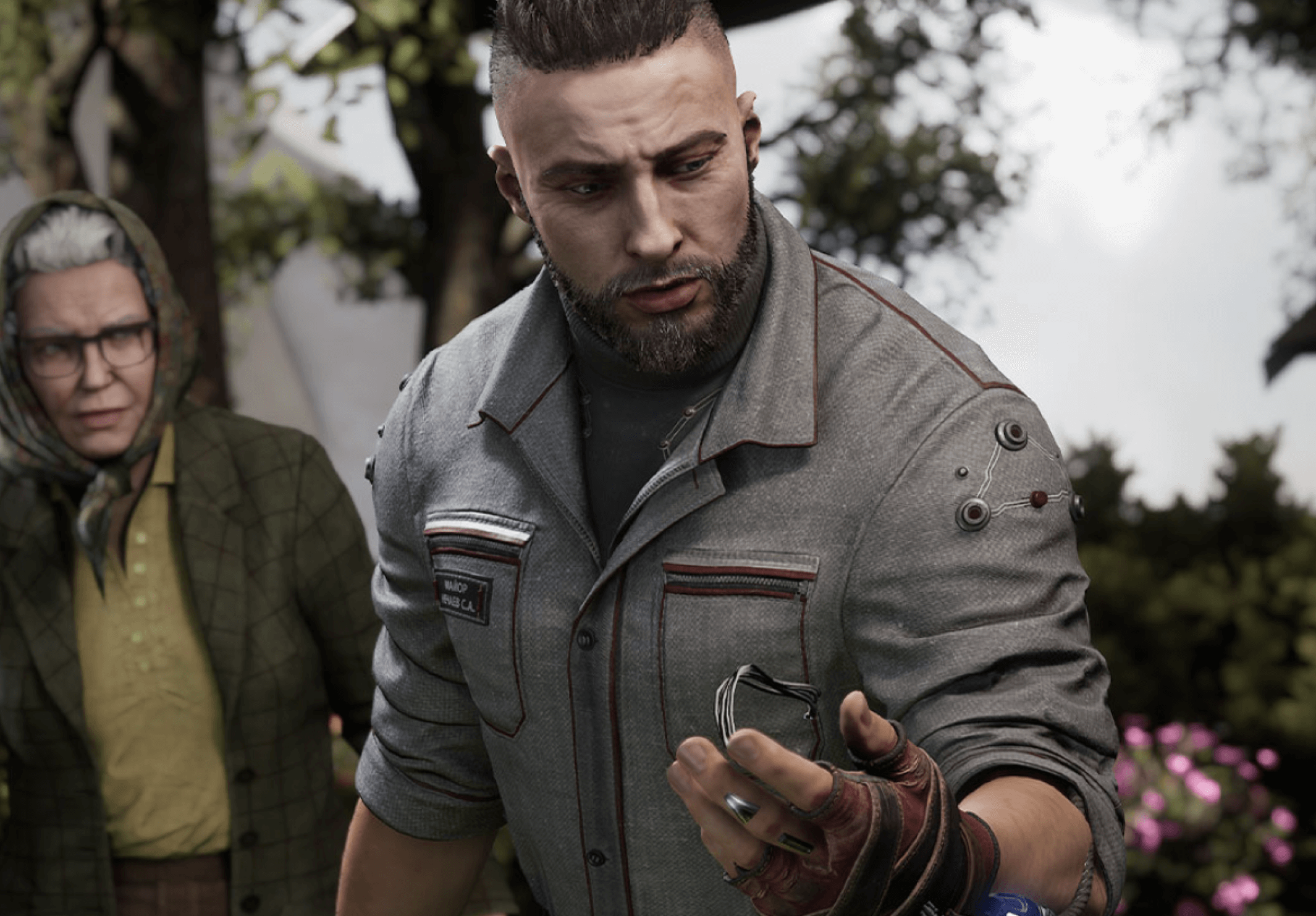
Our first project, Atomic Heart, doesn't just tell a captivating story and provide a vivid experience. The game's world is imbued with science—the achievements of Soviet scientists, their inventions, and their ambitious projects are an integral part of the universe. However, in the game's world, science isn't just a tool of the screenwriters. It's also a genuine educational tool. From the very start of development, we strove for Atomic Heart to do more than just entertain players and cause a rush of emotions. We wanted it to impart new knowledge as well. So, science became a central aspect of the game and a true passion for our team.
Of course, some of the elements and discoveries in Atomic Heart greatly surpass the scientific achievements of the time. The theories we based them on, though, are far from made up. The notes, diaries, audio recordings and other materials players encounter in the game draw from real scientific laws and straddle the line between fantasy and reality. We strove to create a realistic, living world where each invention has its use, operating principle, and method of creation.